Bill Watts is shown at a possible meteor impact site in his backyard.Daily Home Online“I think it was a meteor,” Bill Watts, 54, of Pell City said as he moved the wooden plywood board lying on the ground, revealing a dark, black crater at the edge of some woods on his property. “It had to be so hot and moving so fast to do that,” he ... (HOAX; NOT a meteorite related event.)
The Taurid Meteor
Monday, October 31, 2011

Monday Update
TEPCO Successfully Tests Cover for Fukushima Daiichi Reactor 1
October 31, 2011
Plant Status
- Tokyo Electric Power Co. reports that pilot tests of the ventilation system associated with the cover it has installed over Fukushima Daiichi reactor 1 showed the system successfully filtered more than 90 percent of the radioactive cesium released from the reactor. TEPCO is considering installing similar covers for reactors 3 and 4, both of which were damaged by hydrogen explosions following the March 11 accident.
Industry/Regulatory/Political Issues
- Japan’s environment ministry said it will store radioactive soil and waste for at least three years within Fukushima prefecture before it is moved out of the area for final disposal. The ministry said it hopes to build the temporary storage facilities by 2014.
Media Highlights
- The Daily Yomiuri reports on the results of Kansai Electric’s first-stage stress test on its Ohi reactor 3 and on the uncertainties surrounding the timing for the restart of Japan’s shutdown reactors. The computer-based test found that the reactor could withstand ground motion from an earthquake nearly double the strength of the plant’s design and a tsunami four times stronger than the plant’s safety standards.
- Newspaper reports say that both India and Vietnam continue to negotiate with Japan on importing Japanese nuclear reactor technology.
Dreaming About a Repository

But here’s the thing. The commission’s draft report suggests final disposition of used fuel in a deep geologic repository – just like it-that-will-not-be-named.
And interestingly, a kind of mirror image of the hearing occurred a few days later – again intended to be about the commission’s draft report but really about Yucca Mountain.
Many who spoke Friday urged the commission to fight for Yucca Mountain, a proposed long-term nuclear waste storage site in Nevada that is on the verge of being rejected by the federal government.
[State] Sen. John Howe said the commission – which took a neutral stance on Yucca Mountain in its report – should support the project. And Egan said he is concerned about the Nuclear Regulatory Commission studying longer-term on-site storage.
“Yucca Mountain should not be off the table,” he said.
Where is this? Minnesota.
Gathered in Minneapolis, legislators, city and tribal leaders, corporate representatives and others shared their reactions to a draft report from the president’s Blue Ribbon Commission on America’s Nuclear Future outlining suggestions for nuclear waste management.
The story doesn’t say who called this meeting, but it had very broad representation among stakeholders near the Prairie Island facility (except perhaps Prairie Island’s owner Xcel, which is quoted separately in the story.) And most wanted a permanent fuel repository.
Surprisingly, very little of this (as reported) seemed to have to do with the used fuel casks at Prairie Island, but the issue of what was promised and not delivered.
On-site storage was supposed to be a temporary measure, but dry-cask storage has been in place at Prairie Island since the 1990s, he said. Johnson urged the commission to push for results this time.
“We are tired of hearing more promises that will just be broken,” he said.
The House members I listened to did not take this angle quite so directly, but it is a different matter when it comes to the states. Now, keeping used fuel on-site for an extended period of time is not dangerous – but it is also not what was promised – and it seems quite reasonable to discuss the implications of not keeping that promise.
---
And what about Yucca Mountain?
Well, there’s this:
Three Republican presidential candidates pleased the hometown crowd in Las Vegas earlier this month with their answer to a question about whether the federal government should open the long-planned nuclear waste repository in Yucca Mountain, Nevada.
Texas Rep. Ron Paul, former Massachusetts Gov. Mitt Romney and Texas Gov. Rick Perry agreed it was a states’ rights issue and argued Nevada shouldn’t be compelled to accept nuclear waste from other states.
Which would seem to argue for on-site storage as an ongoing solution, which would require changing the Nuclear Waste Policy Act and abrogating the directives of the blue ribbon commission (as we understand them from the draft report).
Here’s Rep. Jeff Duncan (R-S.C.):
“I’d remind all the presidential candidates of the federal government’s promise to construct a long-term storage facility for the legacy weapons materials temporarily being stored in South Carolina,” Duncan said. “I suspect many South Carolina voters, including myself, will expect to hear the presidential candidates solution to this problem during their next visit to the Palmetto State.”
Duncan is referring to the Savannah River Site and he makes a salient point. If the candidates consider domestic nuclear fuel to be a state issue, what do they consider military used fuel? Yucca Mountain was meant to house both.
In other words, it’s a complex issue. Plenty of people will be happy to remind you of that if you underestimate it.
---
From the Lincoln (Neb.) Journal-Star:
The bodies of the final three victims were recovered Monday morning from a grain elevator that exploded Saturday, killing six people and injuring two others.
What happened?
The explosion was a harrowing reminder of the dangers inside elevators brimming with highly combustible grain dust at the end of harvest season. The blast fired an orange fireball into the night sky, shot off a chunk of the grain distribution building directly above the elevator and blew a large hole in the side of a concrete silo.
I would not dare compare this to Fukushima, though the picture at the link brings back memories. What struck me about this is how much risk is involved even in activities that one wouldn’t necessarily call industrial or consider particularly risky (well, from the outside – the silo workers were certainly aware of it.)
I’m sure risk assessment and mitigation are important topics among silo operators – but still, a fireball flew into the Kansas sky – and five workers (all in their early 20s) and a Kansas state grain inspector (father of three young children) are dead. It will be interesting to see how silo operators tighten their safety standards and perhaps install equipment to tamp down the dust.
It’s a blue ribbon, as in commission.
Sunday, October 30, 2011
Katy, Texas Meteor 30OCT2011
Katy, Texas Meteor 8:45 PM CST 30OCT2011
All, Out walking the dog in Katy Texas, near Highway 99 and Fry Road intersection, and saw a bright blue meteor streak lasting about 2 seconds. It came from the east heading due west. Much brighter than Vega/Altair or even the planets. The center of the bright blue area was greater in diameter than the streaked path by a factor of 3X to 4X and the
All, Out walking the dog in Katy Texas, near Highway 99 and Fry Road intersection, and saw a bright blue meteor streak lasting about 2 seconds. It came from the east heading due west. Much brighter than Vega/Altair or even the planets. The center of the bright blue area was greater in diameter than the streaked path by a factor of 3X to 4X and the
Berkeley, California Meteor 30OCT2011
Berkeley, California Meteor 7:20 pm PST 30OCT2011Seen above Berkeley, California About 7:20 pm PST (11:20 GMT)
Start location: obscured by trees
Stop location: not sure, heading east towards Tilden Park
Direction of movement: west to east
Brightness: very bright, orangish, seemed close, as if someone had tossed a match from a short distance Duration: maybe 3 seconds or so that it was visible
Start location: obscured by trees
Stop location: not sure, heading east towards Tilden Park
Direction of movement: west to east
Brightness: very bright, orangish, seemed close, as if someone had tossed a match from a short distance Duration: maybe 3 seconds or so that it was visible
Idaho Meteor 30OCT2011
Rigby, Idaho, USA Meteor 2300MST 30OCT2011
Was out for a walk, and was headed back home, due west. Happened to be looking north at the time. Saw the initial impact of a meteor, coming almost directly from Polaris. It traveled South West, starting about 45 degrees above the north horizon, and moving all the way to the SW sky, before it burned out about 20 degrees above the horizon in the SW sky.
Was out for a walk, and was headed back home, due west. Happened to be looking north at the time. Saw the initial impact of a meteor, coming almost directly from Polaris. It traveled South West, starting about 45 degrees above the north horizon, and moving all the way to the SW sky, before it burned out about 20 degrees above the horizon in the SW sky.
Breaking News - MBIQ Indicates Montana / North Dakota Meteor 30OCT2011
Breaking News -
MBIQ (Meteor Bot Internet Query) Bot Indicates Montana, North Dakota Meteor 30OCT2011
We need your sighting report to confirm this event; thank you!
Dickinson, North Dakota arrived from google.com on "Latest Worldwide Meteor/Meteorite News" by searching for bright light in sky 10/30/11.
19:15:15 -- 27 seconds ago
Emigrant, Montana arrived from google.com on "Latest Worldwide
MBIQ (Meteor Bot Internet Query) Bot Indicates Montana, North Dakota Meteor 30OCT2011
We need your sighting report to confirm this event; thank you!
Dickinson, North Dakota arrived from google.com on "Latest Worldwide Meteor/Meteorite News" by searching for bright light in sky 10/30/11.
19:15:15 -- 27 seconds ago
Emigrant, Montana arrived from google.com on "Latest Worldwide
Saturday, October 29, 2011
Texas Fireball Meteor 29OCT2011
Texas Fireball Meteor 11:44 CST 29OCT2011
On YouTube Uploaded by desertengineer1 on 29 Oct 2011 0 views
Fireball over North Texas with radar scatter occurring at 04:44:15Z (11:44:15 CST). Dramatic fragmentation.
We need YOUR sighting reports; thank you:
Date and Time of event? Location name (town,city) where you were when saw the meteor? Start and Stop location in sky? Direction of movement?
On YouTube Uploaded by desertengineer1 on 29 Oct 2011 0 views
Fireball over North Texas with radar scatter occurring at 04:44:15Z (11:44:15 CST). Dramatic fragmentation.
We need YOUR sighting reports; thank you:
Date and Time of event? Location name (town,city) where you were when saw the meteor? Start and Stop location in sky? Direction of movement?
The Latest Worldwide Meteor/Meteorite News 29OCT2011
Think Earth is spooky? Take a look at space!
msnbc.comMeteor showers may have been scary to ancient peoples, who perhaps thought they indicated that the sky was falling. But to us, they're just cool, and one of them, the Taurids, is getting set to put on a show. The Taurids are
sometimes called the ...
imo-news : Message: Meteor Activity Outlook for October 22-28, 2011
will not interfere
The Latest Worldwide Meteor/Meteorite News 30OCT2011
the space rocks that threaten our livesTelegraph.co.ukA meteor crater in Arizona formed 50000 years ago. Photo: Lunar and Planetary Institute By Alex Hannaford When Paul Chodas and Steve Chesley arrived at Nasa's Jet Propulsion Laboratory, in a valley beneath the slopes of California's San Gabriel ...
KELOLAND.com | Sioux Falls-Area UFO Identified As A MeteorKELOLAND TV is the news, weather and
KELOLAND.com | Sioux Falls-Area UFO Identified As A MeteorKELOLAND TV is the news, weather and
Friday, October 28, 2011
Friday Update
First of Japanese Reactor Stress Test Results Sent to Regulator
October 28, 2011
Industry/Regulatory/Political Issues
- Kansai Electric is to submit to the Nuclear and Industrial Safety Agency (NISA) the results of a “stress test” on reactor 3 of its Ohi plant in Fukui prefecture. The test consists of computer simulations to gauge whether a plant can withstand a major earthquake and tsunami. It is the first to be reported to NISA for consideration on restarting a shutdown reactor. Eighty percent of Japan’s nuclear energy facilities (44 out of 55) have been shut down for safety inspections since the March 11 earthquake.
- Japan’s health ministry said that as levels of radioactive contamination continue to fall, it will be ready to lower its radiation safety limits for food back to international standards as early as next April. After the March accident at Fukushima Daiichi, the government had provisionally set the acceptable limit at 500 millirem per year, five times the international standard. This week Japan’s food safety commission recommended a lifetime cumulative internal dose limit from food consumption of 10,000 millirem.
- Japan’s Atomic Energy Commission said fuel removal from the pools at Fukushima Daiichi reactors 1 through 4 could begin within three years. Removal of the melted fuel from inside the reactors could begin within 10 years, pending repair of the damaged containment vessels. The commission’s report estimates decommissioning the site will take more than 30 years.
Media Highlights
- Global carbon dioxide emissions may rise as much as 7 percent by 2035 if the Fukushima nuclear accident slows the pace of expansion in nuclear energy, says a Bloomberg report on a study by the Japan Institute of Energy Economy.
- NHK World reports that Tokyo Electric Power Co. will request public financial aid of up to $12 billion to help it pay compensation claims to those affected by the Fukushima accident. TEPCO will submit a special business plan to the government Friday, outlining cost-cutting measures and restructuring steps the utility was ordered to elucidate to be considered for government assistance.
Stakes Through the Heart
F
"Every new nuclear plant licensed and built is a stake thru the heart of energy efficiency, offshore wind, solar, and other clean energy sources," said Susan [Corbett, the chair of the South Carolina Sierra Club.]
A stake through the heart? Isn’t that what you do to the undead? In any event, Happy Halloween! (Yes, yes, it’s Monday, but the parties will be this weekend.)
Oh, and you can buy the t-shirt here.
---
From the AP, about Florida Power & Light getting permission from its Public Service Commission to charge ratepayers a little more while pursuing new nuclear generation:
The law is being challenged in federal court and legislation has been introduced to repeal it next year. A similar bill this year failed to get traction in the Legislature, which passed the cost recovery law in 2006 to encourage the expansion of nuclear power. Utilities otherwise would have to borrow the money, but many investors are reluctant to take a chance on nuclear plants.
Uh, no. No problem with the challenge or legislation, which aggrieved people have a right to pursue, but the reason to do this has nothing to do with skittish investors.
This is closer to correct:
The projects will add an estimated 2,614 MW of nuclear power to FPL's generation portfolio. FPL says the projects will save its customers up to $1.5 billion in the long term.
Why? Because FPL can avoid interest charges by paying off loans earlier and by pursuing some activities without loans. This is a great way to pursue all kinds of public works, not just energy facilities. It is not without controversy – call it the bird in the hand vs. the two in the bushel controversy - but it’s important to correctly describe it.
We may come back to this story when it’s moved along a little more.
---
Amory Lovins, the chairman of the Rocky Mountain Institute and the author of influential books like Winning the Oil Endgame and Natural Capitalism, is back with a new book--and this time, he's claiming that the U.S. can do the seemingly impossible: run an economy that's 158% larger by 2050 without any coal, oil, nuclear energy, or new inventions (and one-third less natural gas).
I have a real weakness for big dreamers with big plans, so I have to salute Lovins at this particular crossing for pulling together the whole energy sphere to make it fit his own particular prejudices and preferences.
"It's first about realizing that it's possible, and second, realizing that it's profitable. There are $5 trillion [in new economic value] on the table and you can get your piece of it," says Lovins. These economic opportunities will be found in more efficient vehicles, energy-saving buildings, more productive and efficient industry, and greater use of renewable energy.
“And you can get your piece of it.” Points for salesmanship, too. It feels a bit like renewable snake oil, but I think Lovins is utterly sincere. Sincere doesn’t equal correct, but hey!, it’s the future we’re talking about here. Dreaming big about the future is always permitted.
Check out a well-informed – and even epic - retort to Lovins’ views on nuclear energy here, by our own David Bradish.
---

The head and the right arm were finished first and displayed separately in the U.S. to help raise funds for the pedestal. When this did not prove adequate, New York World publisher Joseph Pulitzer started a drive through the newspaper and collected 120,000 donations, many of them under a dollar. But it was enough. The deadline was blown – who cares? – and the statue was dedicated on October 28, 1886.
The picture shows Liberty still under construction in France. Presumably, the torch arm was still touring the U.S.
Will Europe Struggle to Keep the Lights On?
A new study from consulting company Capgemini said that Europe may have trouble “keeping the lights on” this winter thanks to the nuclear phase-out in Germany.

Following its reactor shutdowns, Germany began to import electricity from its neighbors, including more than 2,000 MW per day from France. During the winter electricity peak, France mainly imports electricity from Germany and this will no longer be possible in coming years. This represents a real threat to some countries “keeping the lights on” for winter 2011/2012 and future winters.
The report sums it up well: without German nuclear generation, energy security is down, emissions are up. First, security. The Europeans better cozy up to the Russians because they will be more dependent on them than ever.
In 2010, the EU imported 113 bcm of gas by pipeline from Russia, representing 33% of total gas imports. In 2030, gas flowing through Gazprom pipelines is expected to represent 50% of all European gas supplies.
That’s right, 50 percent, half of all European gas. But Gazprom’s dependable, right? Sure, most of the time. Just ask Ukraine, Belarus and Lithuania. But Nord Stream should end all that, right? Sure, no problem.
Then, there’s emissions: the nuclear phase-out is taking Germany further away from its climate goals. The Breakthrough Institute had this to say in its analysis of the German government plan to phase out nuclear.
The plan indicates that--in the absence of nuclear power--Germany will continue to be heavily reliant on fossil-fuel generation for the bulk of its electricity supply. The report calls for the construction of 5 GW of new natural gas power plants, in addition to 11 GW of new coal-fired power plants currently
under construction in the country. This will leave the country with a net increase of 5 GW in coal-fired electricity capacity...this planned uptick in fossil fuel generation would cause the country's overall carbon emissions to rise by as much as 14% of the country's 2008 total carbon emissions.
But there’s hope. Some of Germany’s neighbors see an opening here. Why not sell the Germans low-cost, low-carbon electricity generated by nuclear power plants? [WSJ, subscription req’d] The Czech Republic seems particularly well placed.
On Monday, the country's government-controlled CEZ AS [electrical utility] will issue technical specifications for a $25 billion project to build up to five new nuclear reactors, with the first two scheduled to go online by 2025.
What’s more, the Czechs are old hands at exporting energy.
Vaclav Bartuska, the Czech government's special energy envoy, said the Czech Republic wants to increase the proportion of its electric power generated by nuclear reactors to 50% from the current 30%…CEZ, which is operating six reactors now, has long been one of Europe's largest power exporters, sending electricity to neighboring Germany and elsewhere.
Poland may be getting into the act and Hungary is toying with the idea. What’s not to like? It’s probably more secure than Russian gas and will help Germany meet those emissions goals. We’ll give the Czechs the last word, as it’s Czech National Day today.
"There is antinuclear sentiment in some countries," Mr. Bartuska added. But until alternate energy sources make economic sense, "we see nuclear as the solution."
For more on American and Czech cooperation in nuclear energy, see this fact sheet from the White House.
Most pristine known asteroid is denser than graniteNew ScientistThat hidden history of melting might explain a "seeming contradiction between the meteorite suite and the asteroids we see", says Weiss. Most asteroids look unmelted, but most meteorites that have fallen to Earth – thought to be fragments of asteroid ...
Slideshow: Colors of the cosmosmsnbc.comAn Orionid meteor streaks through the
Slideshow: Colors of the cosmosmsnbc.comAn Orionid meteor streaks through the
On The Discovery of Blinky in Argentina
 Like a lot of folks, we've been seeing the reports out of Argentina that locals have caught a 3-eyed fish (leading to inevitable Simpsons comparison) in a lake adjacent to the Embalse nuclear power plant.
Here are just a couple of thoughts before the shots get mainstream media pickup:
- While the photos in question might be interesting to those who get their science from a prime time cartoon, one would hope they would be treated with a healthy dose of skepticism.
- If the photos are real, we need to keep in mind that while seeing examples of mutation can be unsettling, they're not uncommon and occur naturally all the time.
- Drawing a connection between this fish and the power plant is more than a bit of a stretch. During normal operations, nuclear power plants are a source of clean and reliable, carbon free power. As even a source like Scientific American has noted, coal plants actually emit more radioactivity than nuclear power plants.
Thursday, October 27, 2011
The Latest Worldwide Meteor/Meteorite News 27OCT2011
Latest Worldwide Meteor/Meteorite News: Nevada, Iowa Meteor ...Sighted good-sized white meteor object ~ 8:45 PM about 4 miles south of Nevada, Iowa ... Location name (town,city) where you were when saw the meteor ? ...lunarmeteoritehunters.blogspot.com/.../nevada-iowa-meteor-2...
Meteors to give us reason to look in night skyGaston GazetteA bluish white meteor spotted in Gastonia Monday night
Meteors to give us reason to look in night skyGaston GazetteA bluish white meteor spotted in Gastonia Monday night
Wednesday, October 26, 2011
Incentivizing Energy

---
The problem with nuclear energy is that it is so heavily subsidized by the federal government. Why, surely a privately held industry could afford to – oops, new information from the control room.
An updated study on federal energy incentives confirms that the main beneficiaries of more than $800 billion of federal energy incentives over the past six decades have been the oil and natural gas industries. The oil and natural gas industries together garnered 60 percent of federal incentives between 1950 and 2010, with 44 percent of the roughly $837 billion in federal support going to the oil sector, according to the report by the consulting firm Management Information Services Inc. (MISI).
I guess we should allow that the domestic nuclear energy business has existed for all but a few years of that time – Dresden 1 went online in 1960, with construction and planning going back several years. Renewable energy sources are much younger, though, except for hydro, so clearly nuclear will far outstrip them in terms of government incentives – excuse me – what? – control room again.
The MISI study also shows that, contrary to some claims, federal energy incentives have not gone to nuclear energy technologies at the expense of renewable energy sources, such as wind and solar. In fact, they're roughly equal. Of the total incentives provided since 1950, nuclear energy has received nine percent ($73 billion), while renewable energy also has received nine percent ($74 billion).
As you may have guessed, energy and electricity production – in all its forms – are items the federal government is keenly interested in promoting. They are key to the progress of any civilization in the modern world. And the government has a means to direct such production - through subsidies, incentives, loan guarantees, land distribution and other instruments. This can go overboard when an industry comes to expect it without demonstrated cause; it can also choke promising advances if new technologies are not encouraged.
The nuclear energy industry takes on occasional criticism that it is too dependent on the federal government – but this report shows that it just isn’t true. I’m not sure there’s a truly fair metric to use here, but the level of public investment in nuclear energy is really quite low compared to its energy relatives and especially low when one considers what the industry has provided in return.
---
Care to relive the experience of the Yucca Mountain used fuel repository? Some folks who lived through those halcyon days have decided to make an oral history of it.
"We chose not to do a top-down approach," she [Abby Johnson, Eureka County's nuclear waste consultant] said. "Other people can interview the senators and the governors, but nobody else is going to interview people in Crescent Valley."
To be honest, anyone working on, say, a book about Yucca Mountain probably would give attention to federal and state officials and the people in the valley, but that’s okay. Johnson doesn’t need to justify herself – her project is fine as is.
Johnson said a surprising thread emerged from the interviews she conducted. In the view of rural Nevadans, the Yucca project was haunted from the start by memories of the atomic bomb detonations at the Nevada Test Site that poisoned thousands of downwinders, soldiers and site workers, and government cover-ups of the tragic impacts.
I’d never heard this before. That it’s an association that has nothing really to do with Yucca Mountain doesn’t make it any less legitimate for the people who feel it. Many of the folks pictured on the site are quite elderly, so they may well remember the days of atomic bomb testing. Even if they were children then and grew to old age there in Eureka County, they have the surest sense of the history and its impact. (About 10,500 downwinders, so called, were compensated by the government through an act of Congress beginning in 1990.)
Now, that’s not to say that there isn’t a plethora of bad information, conspiracy mongering and falsehood among the statements. Yucca Mountain was not a subject about which the truth was very welcome in Nevada. But oral histories are not after the truth, they’re after the truth as it is believed by the people speaking it – and their memories and their feelings. If Johnson can organize it all in a meaningful way, it will be a valuable record for writers and researchers and students and whoever else might come across it.
I haven’t read through all the material yet, so I may be wrong about this, but Johnson doesn’t seem to have spoken to Yucca Mountain’s workers. That’s a big gap and raises the suspicion that the project is meant to reinforce bad feelings about the repository.
Most of the workers did not come from Eureka County (or neighboring Nye County, where Yucca Mountain was sited), and many lived around Las Vegas while doing their jobs. Still, I assume some settled in Eureka for awhile. Leaving them out creates an incomplete history even within the terms Johnson has set. (Maybe she could put up a Linked-in or Facebook page or some such to capture some of those workers who scattered after the project went quiet.)
The population of Eureka County is 1650, by the way – Nye County has more people, about 46,000. There really is a reason why they, and Yucca Mountain, can be said to be in the middle of nowhere.
Any future repository siting process, any future process for siting a centralized storage facility for spent fuel must be voluntary, and it has to be a real meaningfully voluntary program.
That’s Joe Strolin, who was the acting director of the Nevada Agency for Nuclear Projects and its planning director for more than 25 years. Based on some of the conclusions in the draft of the Blue Ribbon Commission’s report on the back end of the fuel cycle, Strolin has the right idea.
Visit the project here.
Joe Strolin
The Sun Rises on New Nuclear
Southern Co. has launched a new print advertising campaign to highlight some of the economic benefits the Vogtle Electric Generating Plant brings to the Georgia area.
I particularly like the image--the sun rising on the construction site for Vogtle units 3 and 4. It sheds a hopeful light on a topic that I discussed in a blog post earlier this week: Is the Future Outlook for Nuclear Energy Bright?

For the latest on construction at the site, see Southern Company’s website.
Entergy Rejects Reports SR-90 Found In Connecticut River Is From Vermont Yankee
Late on Friday afternoon, Rep. Ed Markey (D-Mass.) sent a letter to NRC Chairman Greg Jaczko accusing Entergy, the owner of the Vermont Yankee Nuclear Power Plant, of being less than truthful when it came to emissions of Strontium-90 (Sr-90) from the plant.
The following comes from the Associated Press:
Rep. Edward Markey, the top Democrat on the House Natural Resources Committee, wrote Friday to NRC Chairman Gregory Jaczko to complain that a spokesman for the Vermont Yankee nuclear plant had made statements “at odds with the factual history of the plant,’’ and that the “NRC had not appropriately responded to concerns raised about this issue.’’
Markey’s letter came nearly three months after the incident in question. On Aug. 2, the Vermont Health Department announced that the radioactive isotope strontium-90 had been found in the flesh of small-mouth bass caught in the Connecticut River about 9 miles upstream from the reactor in Vernon. The plant is about three miles from the Massachusetts line; the river flows through Massachusetts and Connecticut before emptying into Long Island Sound.
Markey took issue with a statement issued by Vermont Yankee spokesman Larry Smith saying that “There is absolutely no evidence to suggest that Vermont Yankee is the source for the strontium-90’’ in the fish.
We should note that well before Rep. Markey sent his letter to the NRC, that Entergy had already communicated with Vermont officials twice regarding the test results in question. On August 19, 2011, Vermont Yankee Site Vice President Michael Colomb sent a letter to Vermont Gov. Peter Shumlin denying that the sample found in the Connecticut River could have come from the plant:
None of our groundwater monitoring samples has ever shown the presence of any plant-generated radionuclide other than tritium. As such, we believe there is no connection between the Sr-90 detected in the recent fish sample from the Connecticut River and the water passing through the grounds of Vermont Yankee.
Later in the letter, Colomb explains that strontium has never been present in any liquid releases from the plant:
Vermont Yankee routinely monitors the environment for Sr-90. Test results of our gaseous releases from the last 10 years show that Vermont Yankee has had three gaseous releases which included some Sr-90. These releases were extremely small, were all well within allowable NRC limits, and were reported as required to the NRC.
Colomb notes, however, that 99 percent of all Sr-90 found throughout the world comes from former atomic weapons testing programs, followed by a large dispersal after the 1986 Chernobyl accident.
As numerous studies demonstrate, the existence of trace amounts of Sr-90 in fish is not a new or unexpected occurrence, but has been recognized and studied for decades.
A full copy of the letter is below:


Just a few weeks ago, Colomb sent another letter to Vermont Department of Health Commissioner Harry Chen to follow-up on his request for the plant to increase fish sampling near the plant as a result of the incident. He reiterated that the Sr-90 found in the fish sample is unlikely to be attributed to Vermont Yankee as opposed to other sources.
In fact, according to the NRC and the United Nations Scientific Committee on the Effects of Atomic Radiation, approximately 16.8 million curies of Sr-90 were dispersed into the atmosphere from nuclear testing through 1980. … In comparison, the total annual release of Sr-90 by all U.S. nuclear plants is typically only 1/1000th of a curie.
He continues:
I want to reaffirm that we meet or exceed all environmental monitoring requirements of the NRC, which has exclusive authority to regulate radiological safety and any radiological discharges by Vermont Yankee.
That letter can be read in full by clicking the below image:

The fact remains that Vermont Yankee has never had Sr-90 in any of its liquid releases and has not detected elevated levels of Sr-90 in any of its NRC-required environmental samples of ground water, fish, surface water, soil or vegetation around the Vermont Yankee site. Given these facts, Colomb reconfirmed in his letters that the presence of Sr-90 in the fish sample cannot be attributed to the plant.
As far as we know, Chairman Jaczko has yet to respond to Rep. Markey's letter. When he does, we'll be sure to share it with you.
Wednesday Update
World Nuclear Operators Approve Post-Fukushima Actions
October 26, 2011
Industry/Regulatory/Political Issues
- The general assembly of the World Association of Nuclear Operators approved a set of wide-ranging commitments to nuclear safety at the organization’s first major meeting after the accident at Fukushima Daiichi. About 600 attended the Oct. 23-25 meeting in Shenzhen, China. Operators of nuclear energy facilities from around the world unanimously pledged support for recommendations developed by the WANO Post-Fukushima Commission. Conference delegates voted to
- expand the scope of WANO activities
- develop a worldwide integrated event response strategy
- improve the organization’s credibility, including strengthening its peer review process
- improve WANO’s visibility
- improve the quality of all WANO products and services.
- Yukiya Amano, the executive director of the International Atomic Energy Agency, gave the keynote speech at the WANO meeting in China. "Nuclear safety remains the responsibility of individual countries, but the IAEA will play the leading role in shaping a safer nuclear future throughout the world,” Amano said. “It is important for all of us—governments, nuclear regulators, plant operators and the IAEA—to maintain our sense of urgency even after the crisis at Fukushima Daiichi has faded from the international headlines."
- Japan’s government has empaneled a group of experts to summarize lessons learned from the accident at the Fukushima Daiichi nuclear energy facility. In its first meeting, the panel emphasized that nuclear power plants in the country should have multiple power sources. A disruption of electric power needed to operate reactor cooling systems led to the March 11 accident. The panel plans to finish its work by March 2012.
Media Highlights
- U.S. Nuclear Regulatory Commission Chairman Gregory Jaczko offered “a qualified defense of Japan’s longer-term evacuation policy” at a Washington, D.C., forum this week and indicated that some of the people evacuated from areas near the Fukushima Daiichi nuclear energy facility may never be able to return to their homes, the Wall Street Journal’s Japan Real Time blog reports.
Upcoming Events
- The Senate Environment and Public Works Committee and its Subcommittee on Clean Air and Nuclear Safety will hold the second joint hearing on the NRC’s near-term post-Fukushima task force recommendations Nov. 3. All five NRC commissioners will be invited to testify. The first hearing was held Aug. 2.
Tuesday, October 25, 2011
The Latest Worldwide Meteor/Meteorite News 26OCT2011
Latest Worldwide Meteor/Meteorite News: New York City, NY Meteor ...New York City, NY Meteor 20OCT2011. New York City, NY Meteor ~9:40PM 20OCT2011 I was driving Southbound on the Bruckner Expressway overlooking the ...lunarmeteoritehunters.blogspot.com/.../new-york-city-ny-mete...
Meteor Activity Outlook for October 12-28, 2011 « The Transient Sky ...By Carl HergenrotherSorry, I'm a few days
Meteor Activity Outlook for October 12-28, 2011 « The Transient Sky ...By Carl HergenrotherSorry, I'm a few days
MBIQ Indicates Cranston, RI Meteor Fireball 25OCT2011
Cranston, RI Meteor Fireball 9:30 pm 25OCT2011
At about 9:30 pm Eastern Time, on October 25, 2011, I observed a rather large blue/white fireball enter the sky and break apart as is fell closer to the ground. I live in Cranston, and it looked to be falling somewhere to the Northeast, possibly over Narragansett Bay in Providence. It was much larger and much brighter than an ordinary meteor that
At about 9:30 pm Eastern Time, on October 25, 2011, I observed a rather large blue/white fireball enter the sky and break apart as is fell closer to the ground. I live in Cranston, and it looked to be falling somewhere to the Northeast, possibly over Narragansett Bay in Providence. It was much larger and much brighter than an ordinary meteor that
Kansas Meteor 25OCT2011
Wakeeney, KS Meteor 8:55 PM 25OCT2011
Standing on my porch looking up, slightly southeast, caught glimpse of what I thought was a very bright falling star when it exploded in a shower of sparks right before my eyes... very exciting! -Greg Guise Thank you Greg!
YOUR sighting report is important; thank you:
Date and Time of event? Location name (town,city) where you were when saw the meteor?
Standing on my porch looking up, slightly southeast, caught glimpse of what I thought was a very bright falling star when it exploded in a shower of sparks right before my eyes... very exciting! -Greg Guise Thank you Greg!
YOUR sighting report is important; thank you:
Date and Time of event? Location name (town,city) where you were when saw the meteor?
Monday, October 24, 2011
The Latest Worldwide Meteor/Meteorite News 25OCT2011
Northern Lights seen across area Monday nightWBTVBy Nick Needham - email CHARLOTTE, NC (WBTV) - Several people spotted what they thought was a \ meteor blazing across the sky near the state line Monday evening. Reports have come in from Indian Trail, Drexel and several other communities in NC, ...
Hard Core Meteorite Impact
Astrobiology Magazine (press release)Seeking to better understand the
Hard Core Meteorite Impact
Astrobiology Magazine (press release)Seeking to better understand the
More NEO Close Encounters Found to Pass 24OCT2011
More NEOs Found! Expect Continued High Meteor Activity Into November (at least until 10NOV). -LunarMeteorite*Hunter, Tokyo
(2011 UC64) (2011 UH10) (2011 UN91)
UPCOMING CLOSE APPROACHES TO EARTH
1 AU = ~150 million kilometers
1 LD = Lunar Distance = ~384,000 kilometers
Object
NameClose
Approach
DateMiss
Distance
(AU)Miss
Distance
(LD)Estimated
Diameter*H
(mag)Relative
Velocity
(km/s)
(2003 FH
(2011 UC64) (2011 UH10) (2011 UN91)
UPCOMING CLOSE APPROACHES TO EARTH
1 AU = ~150 million kilometers
1 LD = Lunar Distance = ~384,000 kilometers
Object
NameClose
Approach
DateMiss
Distance
(AU)Miss
Distance
(LD)Estimated
Diameter*H
(mag)Relative
Velocity
(km/s)
(2003 FH
Breaking News- Reports of Red and Green Sky -- May be from CME Impact 24OCT2011
MBIQ Indicates Red and Green Night Sky -- May be from Today`s CME Impact (Coronal Mass Ejection) 24OCT2011 MBIQ has indicated large "Event", Northern Lights from Ontario to Texas? over North America 24OCT2011
Rock, Ks. Red Glow ~20:35 CST 24OCT2011
We saw a bright red glow to the northeast. Lasted 5-8 minutes. Stars were visible. Glow started at horizon and illuminated outbuildings and trees.
Rock, Ks. Red Glow ~20:35 CST 24OCT2011
We saw a bright red glow to the northeast. Lasted 5-8 minutes. Stars were visible. Glow started at horizon and illuminated outbuildings and trees.
MBIQ Indicates Large South Carolina, North Carolina, Georgia Meteor Event 24OCT2011
MBIQ (Meteor Bot Internet Query) Bot Indicates Large South Carolina, North Carolina, Georgia Fireball Meteor Event 24OCT2011 with video
On YouTube Uploaded by shogun338 on 25 Oct 2011 0 views
We need YOUR witness reports to post details; thank you:
Athens, Georgia ~7:22 PM 24OCT2011
I just saw a bright object (similar to a shooting star but much bigger and brighter) fly through the sky for
On YouTube Uploaded by shogun338 on 25 Oct 2011 0 views
We need YOUR witness reports to post details; thank you:
Athens, Georgia ~7:22 PM 24OCT2011
I just saw a bright object (similar to a shooting star but much bigger and brighter) fly through the sky for
Is the Future Outlook for Nuclear Energy Bright?
To every debate, there are two sides of the coin. How will nuclear energy stack up in a post-Fukushima world? Heads—nuclear energy will continue to prosper and become even safer despite potential regulatory hurdles that could befall the industry. Tails—Fukushima’s impact on the industry will force new nuclear energy production to come to a screeching halt.
David Crane, president and CEO of NRG Energy, believes that the future outlook for nuclear energy is “dim.”
The Hartford Business Journal writes:
Take, for instance, an email I received just today from our friends at SCANA who are doing preconstruction work for the Summer 2 and 3 project in South Carolina.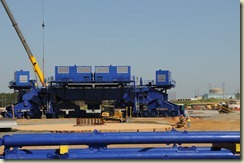
Photo credits from SCANA: Assembly of the heavy lift derrick, or the Bigge Crane, is well under way. Known as the world’s biggest crane, its boom is 560 feet.
David Crane, president and CEO of NRG Energy, believes that the future outlook for nuclear energy is “dim.”
The Hartford Business Journal writes:
America’s long-term energy future lies with both large- and small-scale solar and wind generation, especially solar, backed up by baseload and peaker power plants using a variety of fuels, Crane said. The bulk of that back-up fuel source was supposed to be nuclear power, he said, but after the Japanese nuclear disaster in March, the regulatory burdens make expanded nuclear nearly impossible.The Journal continues:
The problem with nuclear isn’t the typical not-in-my-backyard neighbors concerns, as nuclear is widely accepted in the South, said Crane. Instead, nuclear development suffers from regulatory and government financing hurdles only made worse by Japan.Crane’s outlook for the industry comes after NRG in April decided to write down $481 million of its investment in two new nuclear units at the South Texas Project due to concerns about financial resources. However, The New York Times writes that the project…
was in considerable doubt even before the accident at Fukushima began on March 11. Texas has a surplus of electricity and low prices for natural gas, which sets the price of electricity on the market there.Given current U.S. natural gas prices are low and that overall electricity demand is down from the depressed economy, it is not hard to understand why some, including Crane, take the “tails” side view. But, there are still others in the “heads” camp to balance the debate.
Take, for instance, an email I received just today from our friends at SCANA who are doing preconstruction work for the Summer 2 and 3 project in South Carolina.

With about 1,000 workers on site, a significant amount of infrastructure work is complete, including water supply lines and a temporary drain system. All commercial buildings have been erected. This includes pipe shops, electrical shops, an engineering building, and warehouses.
Similar preconstruction activities continue to take place at Southern Co.’s Plant Vogtle site in Georgia. In May, I had the privilege of videotaping a short interview with then-CEO Jim Miller of Southern Company on whether or not he thought the industry would continue to move forward. His take:
We are going to continue constructing Vogtle 3 and 4 and other new plants in this country and move forward with this safe, clean, very reliable and low-cost source of electricity for our customers and for our country.
I guess only time will tell who will win the debate, but I’m hoping for heads.
Photo credits from SCANA: Assembly of the heavy lift derrick, or the Bigge Crane, is well under way. Known as the world’s biggest crane, its boom is 560 feet.
“We cannot keep the lights on without nuclear energy.”

"There will be, in the short term, a slowdown in some countries. But others like France, India or China [won't see] an impact on their [nuclear] programs," he says.A little more:
"For example, China and India are expanding by five to eight times their use of nuclear energy by 2020 or 2022. Brazil is expanding its nuclear-power program. South Africa is looking seriously to do so," he says. "All these large emerging countries, with large populations and development challenges, have to rely on nuclear energy.Lots more at the link. The article says the ElBaradei has political ambitions in his native Egypt, but I’ve read in various other places that his international profile might make that difficult because Egyptian voters might not think he is attuned to homeland issues. Well, we’ll see.
I make no bones about finding ElBaradei an altogether admirable figure. He gathered enough authority around himself to balance the imperatives of small countries against the conflicting priorities of larger, pushier neighbors. This gave the IAEA a tremendous moral force even if it did not always impact the course of events practically. But it’s what the United Nations, of which IAEA is a part, should do.
The BBC article includes this: “In the words of Greenpeace International, Mr. ElBaradei (at the IAEA) is both ‘nuclear policeman and nuclear salesman’”. This is because the agency dealt with both non-proliferation issues and domestic nuclear energy development. Actually, the subjects fit together pretty snugly. See here for more on that.
---
We’ve been happy to snark at Germany’s decision to close its nuclear plants. But it’s nice to see the non-snarky weight in:
Public fears about atomic energy after the accident at Japan's Fukushima Daiichi power plant prompted Japan, Italy and Germany to cancel plans for new reactors or accelerate the shutdown of existing ones. The IEA [International Energy Agency] says that poses a danger to plans to keep emissions in check, particularly for member countries of the Organization for Economic Co-operation and Development, where nuclear power accounts for more than half of all low-carbon power.Oh, does it pose a danger? Well:
Germany has said that it may need to extend the life of its ageing coal-fired plants to make up for the loss of nuclear energy. This week, Miguel Sebastian, the industry and trade minister of Spain, said his country needed to develop the coal resources inside its borders.Indeed. Visit the International Energy Agency here. Lot and lots of useful data.
---
Interesting piece on the United Kingdom’s energy profile at the Independent:
In the post Fukushima era we should still have confidence that nuclear energy can be a safe secure affordable form of energy for the 21st century and that the new modern plants available today should be a significant component of the UK’s energy mix for the foreseeable future. In the very cold days of last winter, nuclear energy was our main source of low carbon electricity. It provided ~18% of the UK’s requirements; 16% from our own stations and a further 2% imported from France. Almost all the rest was provided from power stations burning fossil fuel.The conclusion of writer Dame Sue Ion (what a great name!):
We cannot keep the lights on without nuclear energy.Yup.
Mohamed ElBaradei
Binstead, Isle of Wight, UK Fireball Meteor 23OCT2011
Binstead, Isle of Wight, UK Fireball Meteor ~19:45 BST 23OCT2011
Approx 19.45, BST, Seen from Binstead, Isle of Wight, UK from East to West elevation approximately 70 degrees east tracked across, disappeared about 85 degrees West, must have been large object, extremely bright illuminated clouds from above and lasted for four to five seconds, before bursting and dissipating. -Phil Young Thank
Approx 19.45, BST, Seen from Binstead, Isle of Wight, UK from East to West elevation approximately 70 degrees east tracked across, disappeared about 85 degrees West, must have been large object, extremely bright illuminated clouds from above and lasted for four to five seconds, before bursting and dissipating. -Phil Young Thank
Sunday, October 23, 2011
The Latest Worldwide Meteor/Meteorite News 24OCT2011
Fireball Recorded Japan -- another one Oct. 19, 2011Another Fireball Recorded from Japan on Oct. 19, 2011.www.godlikeproductions.com/forum1/message1679055/pg1
Falling Meteorite Sparks Panic in Britain After Pilot Mistakes It for a PlaneFox NewsWHITSTABLE, England – A meteorite in southern England sparked a rescue mission after shocked onlookers thought they were seeing a plane crashing into the
Falling Meteorite Sparks Panic in Britain After Pilot Mistakes It for a PlaneFox NewsWHITSTABLE, England – A meteorite in southern England sparked a rescue mission after shocked onlookers thought they were seeing a plane crashing into the
MBIQ Indicates Maryland, Rhode Island, Virginia, New Jersey Meteor 23OCT2011
MBIQ (Meteor Bot Internet Query) Bot Indicates Maryland, Rhode Island, Virginia, New Jersey Meteor 23OCT2011
Frederick, MD. USA Meteor ~8:00 PM Local 23OCT2011
Meteor or Shooting star. Possible tail or blur.
Travelling towards East Over Frederick, MD. USA 8:00 PM local
-Luanne H. Thank you Luanne!
MBIQ Data:
Arlington, Virginia arrived from google.com on "Latest Worldwide Meteor/Meteorite
Frederick, MD. USA Meteor ~8:00 PM Local 23OCT2011
Meteor or Shooting star. Possible tail or blur.
Travelling towards East Over Frederick, MD. USA 8:00 PM local
-Luanne H. Thank you Luanne!
MBIQ Data:
Arlington, Virginia arrived from google.com on "Latest Worldwide Meteor/Meteorite
Texas / Louisiana Daytime Meteor 23OCT2011
Boerne, Texas Meteor 07:06 AM 23OCT2011
Sighted from Boerne, TX area (north of San Antonio) - 10-23-2011 at 0706 or 0707 in the NNE sky. My guess: started aprox 60 degrees above the horizon and trailed down to about 40 degrees above horizon, mostly on a downward track towards the horizon, lasting a few seconds. Brightest and most colorful I have ever seen, by far. It appeared to leave a "contrail
Sighted from Boerne, TX area (north of San Antonio) - 10-23-2011 at 0706 or 0707 in the NNE sky. My guess: started aprox 60 degrees above the horizon and trailed down to about 40 degrees above horizon, mostly on a downward track towards the horizon, lasting a few seconds. Brightest and most colorful I have ever seen, by far. It appeared to leave a "contrail
Saturday, October 22, 2011
The Latest Worldwide Meteor/Meteorite News 22-23OCT2011
Orionid Meteor Shower Wows Weekend Skywatchers
Space.comby Tariq Malik, SPACE.com Managing Editor A weekend meteor shower created by the leftover bits of the famed Halley's comet is thrilling skywatchers around the world, who captured amazing photos of cosmic light show. The dazzling "shooting star" display ...
The Meteor and the Nordlys
Universe Todayby Jason Major on October 22, 2011 A
Friday Update
From NEI’s Japan micro-site:
NRC Commissioners Adopt Near-Term Recommendations
Industry/Regulatory/Political Issues
Media Highlights
NRC Commissioners Adopt Near-Term Recommendations
Industry/Regulatory/Political Issues
- The U.S. Nuclear Regulatory Commission has directed its staff to implement seven safety recommendations from the NRC’s Fukushima task force. The recommendations are among 12 presented by the task force in July. NRC staff reviewed the task force’s July 12 report and selected the recommendations it believed most appropriate for immediate action. The recommendations cover issues including the loss of all electrical power at a reactor, reviews of seismic and flooding hazards, emergency equipment and plant staff training to manage severe accidents.
- A panel of the Japan Nuclear Safety Commission has issued a draft plan for determining emergency areas around the country’s nuclear energy facilities. The proposal calls for designating areas within three miles of a plant as zones that should be evacuated immediately in the event of an accident. People within 18 miles of a reactor would be asked to shelter indoors or evacuate at a slower pace, depending on the accident. The plan is due for further study before implementation.
- The Fukushima Prefecture assembly wants Tokyo Electric Power Co. to permanently shut down all 10 nuclear reactors in the prefecture. Six of the reactors are at the Fukushima Daiichi site; the others are at the nearby Daini site. TEPCO has said it will close the four damaged reactors at Fukushima Daiichi. None of the reactors has been restarted since the earthquake.
- Tamura, a city near the Fukushima Daiichi nuclear energy facility, is using a small, unmanned helicopter to check radiation levels of farms and forests. Parts of the city were among the areas outside the 12-mile no-entry zone for which the government has lifted its evacuation advisory.
Media Highlights
- After the earthquake and tsunami in Japan, hundreds of people took refuge at the Onagawa nuclear energy facility, and stayed for three months, news website TownHall.com reports.
Upcoming Events
- The Senate Environment and Public Works Committee and its subcommittee on Clean Air and Nuclear Safety will hold the second joint hearing Nov. 3 on the NRC’s recommendations for safety and preparedness measures at U.S. reactors. All five NRC commissioners will be invited to testify. The first hearing was held Aug. 2.
Video of Bolide Meteor as Seen from Lincoln, Nebraska 19OCT2011
Mystery Green Fireball Caught On CCTV In Nebraska 19OCT2011
Uploaded to Youtube by MaryGreeley on Oct 20, 2011 1,608 views
Original Post by LunarMeteorite*Hunter - The Latest Worldwide Meteor/Meteorite News:
Breaking News- Meteorites Produced? -MBIQ Indicates Large Bolide Meteor Event Manitoba Canada, South Dakota, Colorado, Wyoming, Kansas, Oklahoma, Nebraska, Missouri, Iowa, Minnesota
Friday, October 21, 2011
Just Newly Discovered NEO Close Encounters to Bring Even More October Elevated Meteor Activity 22OCT2011
More NEOs Discovered!
NEOs Close Encounters to Bring Even More October Meteor Activity 22OCT2011
Newly Discovered NEOs 2011 UH10, 2011 UL10 !!!
Cameras ready? Get outside and watch! Elevated fireball meteors through the end of October.
UPCOMING CLOSE APPROACHES TO EARTH
1 AU = ~150 million kilometers
1 LD = Lunar Distance = ~384,000 kilometers
Object
NameClose
Approach
DateMiss
Distance
(
NEOs Close Encounters to Bring Even More October Meteor Activity 22OCT2011
Newly Discovered NEOs 2011 UH10, 2011 UL10 !!!
Cameras ready? Get outside and watch! Elevated fireball meteors through the end of October.
UPCOMING CLOSE APPROACHES TO EARTH
1 AU = ~150 million kilometers
1 LD = Lunar Distance = ~384,000 kilometers
Object
NameClose
Approach
DateMiss
Distance
(
ROSAT SET to Hit Earth 23OCT2011
German Satellite ROSAT Set to Crash into Earth 23OCT2011
The 1.6 ton mirror from ROSAT, scheduled to crash 23OCT2011, may hit the Earth intact according to J. Kelly Beaty of Sky and Telescope Magazine:
http://www.skyandtelescope.com/news/132109883.html
Please Check back as this post will be update with projected time and crash location information.
Live Tracker:
http://digilander.libero.it/
The 1.6 ton mirror from ROSAT, scheduled to crash 23OCT2011, may hit the Earth intact according to J. Kelly Beaty of Sky and Telescope Magazine:
http://www.skyandtelescope.com/news/132109883.html
Please Check back as this post will be update with projected time and crash location information.
Live Tracker:
http://digilander.libero.it/
The Latest Worldwide Meteor/Meteorite News 22OCT2011
Taking the Temperature of Ancient MarsSky & TelescopeMention the meteorite Allan Hills 84001 in a room full of planetary scientists, and they'll know exactly what you're taking about. David McKay (lower left) and his colleagues at their August 1996 press conference announcing possible signs of ancient ...
Dazzling Orionid meteor shower due Saturday
msnbc.comBy Natalie Wolchover, Life's Little
Dazzling Orionid meteor shower due Saturday
msnbc.comBy Natalie Wolchover, Life's Little
Athens, Georgia Meteor Fireball 21OCT2011
Athens, Georgia Meteor Fireball 6:41 PM Eastern 21OCT2011
Super bright metor/shooting star heading NE over Athens GA 6:41 pm 10/21/11
-Jon T. Any more details Jon? Thank you Jon!
We need YOUR sighting reports so that we can post; thank you:
Date and Time of event? Location name (town,city) where you were when saw the meteor? Start and Stop location in sky? Direction of movement? Duration of
Super bright metor/shooting star heading NE over Athens GA 6:41 pm 10/21/11
-Jon T. Any more details Jon? Thank you Jon!
We need YOUR sighting reports so that we can post; thank you:
Date and Time of event? Location name (town,city) where you were when saw the meteor? Start and Stop location in sky? Direction of movement? Duration of
Thursday, October 20, 2011
London, Ontario Meteor 21OCT2011
London, Ontario Meteor 4:50 am 21OCT2011
I was out for a smoke because I couldn't sleep at 4:50 am . I was looking at the sky because I love looking at the stars, and have a love for astronomy. All of the sudden I see this huge fire ball falling from the sky it lasted at least 3-4 seconds. I thought I was crazy at first, but I couldn't deny the fact I had seen something. It looked like something
I was out for a smoke because I couldn't sleep at 4:50 am . I was looking at the sky because I love looking at the stars, and have a love for astronomy. All of the sudden I see this huge fire ball falling from the sky it lasted at least 3-4 seconds. I thought I was crazy at first, but I couldn't deny the fact I had seen something. It looked like something
Nevada, Iowa Meteor 20OCT2011
Nevada, Iowa Meteor ~8:45 PM 20OCT2011
Sighted good-sized white meteor object ~ 8:45 PM about 4 miles south of Nevada, Iowa while driving south on S-14. probably lasted 2 seconds traveling south east approximately 55 degrees from the horizon. Since I was traveling I did not follow trail well, but appeared to leave a brief orange glow on horizon. Curious if others sighted this. -Linda Thank
Sighted good-sized white meteor object ~ 8:45 PM about 4 miles south of Nevada, Iowa while driving south on S-14. probably lasted 2 seconds traveling south east approximately 55 degrees from the horizon. Since I was traveling I did not follow trail well, but appeared to leave a brief orange glow on horizon. Curious if others sighted this. -Linda Thank
Mansfield, MASS. Meteor 20OCT2011
Mansfield, MASS. Meteor 7:50 pm Eastern Time 20OCT2011
-Mark B. Thank you Mark. Any Details?
Medway, MASS. Meteor shortly before 8:00 pm Eastern Time 20OCT2011I was in my hottub last night, looking to the South, shortly before 8pm. I saw what I thought was an airplane, but there was no sound associated with it, and the lights were not blinking, nor were they on 'wings' like the typical
-Mark B. Thank you Mark. Any Details?
Medway, MASS. Meteor shortly before 8:00 pm Eastern Time 20OCT2011I was in my hottub last night, looking to the South, shortly before 8pm. I saw what I thought was an airplane, but there was no sound associated with it, and the lights were not blinking, nor were they on 'wings' like the typical
Orting, Washington Meteor 20OCT2011
Orting, Washington Meteor ~845 pm 20OCT2011
Hello, I saw what looked like to be a meteor in orting wa around 845 pm 10/20/2011 orange and red glow as if coming into the atmosphere, then faded. anyone else? -Dan Thank you Dan!
We need YOUR meteor sighting report; thank you:
Date and Time of event? Location name (town,city) where you were when saw the meteor? Start and Stop location in sky?
Hello, I saw what looked like to be a meteor in orting wa around 845 pm 10/20/2011 orange and red glow as if coming into the atmosphere, then faded. anyone else? -Dan Thank you Dan!
We need YOUR meteor sighting report; thank you:
Date and Time of event? Location name (town,city) where you were when saw the meteor? Start and Stop location in sky?
Land O Lakes, Florida Meteor 21OCT2011
Land O Lakes, Florida Meteor approximately 4:15am October 21, 2011
Large round ball of white light flashed and then shot straight down. Nothing else. Lasted a second or so. -David and Karen K. Thank you David and Karen!
We need YOUR meteor sighting report; thank you!
Date and Time of event? Location name (town,city) where you were when saw the meteor? Start and Stop location in sky?
Large round ball of white light flashed and then shot straight down. Nothing else. Lasted a second or so. -David and Karen K. Thank you David and Karen!
We need YOUR meteor sighting report; thank you!
Date and Time of event? Location name (town,city) where you were when saw the meteor? Start and Stop location in sky?
The Latest Worldwide Meteor/Meteorite News 21OCT2011
Natural History Museum invites public to identification day eventKTKA.comLAWRENCE — The KU Natural History Museum is calling all amateur rock hounds, fossil hunters and meteorite enthusiasts for an identification event from 1 pm to 4 pm Sunday, Oct. 23. “What on Earth? Rocks, Fossils and Meteorites” will give visitors the ...
National Weather Service says bright light over Sioux Falls area was
National Weather Service says bright light over Sioux Falls area was
Germany Counts Cost of Nuclear Shutdown
Nuclear energy. It’s expensive, right? That’s what a lot of our friends at the Union of Concerned Scientists and Greenpeace keep saying.

Alright, then let’s shut down some plants and start saving money, right? Surely, just on a cost basis alone, it makes sense. To be fair, let’s replace the electrons generated using fission with a mix of (more expensive) renewables and (relatively cheaper) fossil fuels. We can use more domestic coal, maybe import some natural gas and use local renewables to drive down electricity prices. That should save ratepayers real money every month. But wait. Something quite similar is happening in Germany and electricity prices have gone up, not down [FT, subscription req’d. Original article: “Electricity Prices Jump in Europe,” March 15.]. Just after the Fukushima accident, as Germany announced it was shutting down several nuclear power plants, the FT reported:
The cost of electricity in Germany, the European benchmark, immediately rose as utilities are likely to burn more expensive natural gas and thermal coal to bridge the shortfall in electricity.
Then, there are even more expensive options like renewables.
Increasing the share of renewables in electricity and heat is likely to be expensive for some time to come. Onshore wind is currently about 50% more expensive per unit of energy than conventional power sources, while offshore wind is about 250% more expensive.
And now, according to VIX, a German trade group, electricity prices for industrial users are expected to rise next year. It’s particularly poor timing:
Germany's big electricity consumers said on Wednesday they expected their power bills to rise by an average 9 percent for 2012, burdening industry amid a weakening economy and rising finance costs.
Not only that, but cutting nuclear energy out of the mix may be reducing not only the quantity, but the quality of electricity available. The knock-on effect? Horror of horrors! A decline in German manufacturing and export prowess.
…[VIK Chairman Volker Schwich] also said that network frequency changes have become more evident since the withdrawal of the huge nuclear facilities, which had ensured stability. This could hit sensitive industrial production, even if it is not noticeable by household customers.
‘It's not about a candle-lit dinner but complex production processes whose stability, long before a publicly noticeable network black-out, can be threatened,’ he said.
…He said this was unacceptable for an export nation.
There are many cost/benefit trade-offs to consider in energy choices. But here’s hoping that Germany’s rush to ditch nuclear power finally ends one enduring myth: that nuclear energy is just too expensive. As we pointed out before, done right over the long term, it’s one of the cheapest baseload generating options.
Finally, a side note on current prices. While it is true that German electricity prices (to be precise, contracts for baseload electricity in 2012) are down lately, this seems more due to the anticipation that European growth will remain slow this year, as this article notes. I.e., it’s not due to the German nuclear shutdown, which had the opposite effect on prices.
Also, the press release from VIX, in German, is here. I found Google Translate got me pretty close to the original.
Wednesday Update
From NEI’s Japan micro-site:
NRC Creates Long-Term Fukushima Steering Committee
Industry/Regulatory/Political Issues
Plant Status
Media Highlights
Upcoming Events
NRC Creates Long-Term Fukushima Steering Committee
October 19, 2011
Industry/Regulatory/Political Issues
- The U.S. Nuclear Regulatory Commission has created a steering committee to oversee the longer-term review of lessons learned from the Fukushima Daiichi nuclear accident and implementation of recommendations from the agency’s near-term task force. Its responsibilities also include identifying additional steps for the NRC to take.
- Decontamination work has started in Fukushima City, a project that will clean 110,000 houses as well as public facilities and roads near schools by March 2013. Workers are cleaning roofs, removing topsoil and cutting down vegetation. Residents and volunteers have been asked to help in areas with lower radiation levels.
- Farmers in Nihonmatsu City in Fukushima Prefecture are shipping this year’s rice crop following confirmation that radiation levels are below the government limit. The city is about 40 miles from the Fukushima Daiichi nuclear energy facility.
Plant Status
- Tokyo Electric Power Co.’s revised three-year recovery plan for the Fukushima Daiichi nuclear energy facility describes how the utility will maintain stable conditions at the plant. Among other actions, the company will install additional pumps to inject cooling water into the reactors and replace existing hoses. A major step in the plan was achieved recently when the temperatures in all three damaged reactors was reduced to below the boiling point.
- Workers at Fukushima Daiichi continue to decontaminate and manage water that has accumulated at the site. Water continues to be transferred from a temporary tank to a large storage barge anchored offshore. Decontaminated water is cooling the three damaged reactors at the site.
Media Highlights
- With radiation levels dropping at the Fukushima Daiichi nuclear energy facility, a Reuters report looks at the next steps to stabilize the plant.
Upcoming Events
- The Senate Environment and Public Works Committee and its Subcommittee on Clean Air and Nuclear Safety will hold the second joint hearing on the NRC’s near-term post-Fukushima task force recommendations Nov. 3. All five NRC commissioners will be invited to testify. The first hearing was held Aug. 2.
- NRC Chairman Gregory Jaczko will speak on lessons learned from Fukushima Oct. 24 at the American Association for the Advancement of Science in Washington, D.C. Details are on the AAAS website.
Wednesday, October 19, 2011
Dubbo, New South Wales, Australia Meteor 19OCT2011
Dubbo, NSW, Australia Meteor sometime between 9:15-9:30 PM 19OCT2011My name is Mrs. Meg Mckeown. I live in New South Wales, Australia. My niece and her boyfriend were chatting with me over lunch today, which here in Australia, is Thursday, October 20th. They told me that they were outside their apartment last night, Wednesday, October 19th here, and they saw a fleeting light, which flew across
Boulder, Colorado -Meteor/Fireball Sighting 19OCT2011
Boulder, Colorado -Meteor/Fireball Sighting 11:35pm - October 19th, 2011
I was in my back yard when I saw it. It was like a ball of fire - from where I was standing, it looked about the size of an exercise ball. The main part of it was a bright white with an outer greenish glow with a tail trailing behind that was also a white/light pink color. I saw it for maybe about 3-4 seconds before it
I was in my back yard when I saw it. It was like a ball of fire - from where I was standing, it looked about the size of an exercise ball. The main part of it was a bright white with an outer greenish glow with a tail trailing behind that was also a white/light pink color. I saw it for maybe about 3-4 seconds before it
Thornton (Adams County), Colorado Meteor 19OCT2011
Thornton (Adams County), Colorado Meteor 10:19 PM 19OCT2011
My husband and I were walking the dog last night and saw the bright meteor. We did not get any pictures or video.
Location: Thornton (Adams County), Colorado
Time: about 10:19 pm mountain time zone
We were facing south/southeast it streaked across the sky from the northeast to the southwest
I am not sure on duration time
It seemed almost
My husband and I were walking the dog last night and saw the bright meteor. We did not get any pictures or video.
Location: Thornton (Adams County), Colorado
Time: about 10:19 pm mountain time zone
We were facing south/southeast it streaked across the sky from the northeast to the southwest
I am not sure on duration time
It seemed almost
New York City, NY Meteor 20OCT2011
New York City, NY Meteor ~9:40PM 20OCT2011
I was driving Southbound on the Bruckner Expressway overlooking the New York City skyline.
A huge fireball shot across the entire skyline traveling from East to West.
I can't estimate the position of the object's trajectory but it was South of New York City.
This was no ordinary shooting star, it was much bigger than anything I've ever seen before and
I was driving Southbound on the Bruckner Expressway overlooking the New York City skyline.
A huge fireball shot across the entire skyline traveling from East to West.
I can't estimate the position of the object's trajectory but it was South of New York City.
This was no ordinary shooting star, it was much bigger than anything I've ever seen before and
The Latest Worldwide Meteor/Meteorite News 20OCT2011
How to photograph tonight's Orionid Meteor ShowerExaminer.comTonight marks the peak of the Orionid Meteor Shower, a once a year event that is always capable of producing stunning pictures. Yes, while meteor watching is a favorite past time for many, other people desire more, namely, photographing the meteors. ...
Harold Camping's End of the World on Oct 21st same time as Orinoid Meteor?
Harold Camping's End of the World on Oct 21st same time as Orinoid Meteor?
Mothers in Nuclear – Yes, They Do Exist

Issue #1: Getting a breastpump through security. Need I say more? The situation was usually comical, but one special day stands out in my mind. After what seemed like the hundredth time passing my breastpump through security, a well-meaning guard asked me to open the “mechanism.” The breastpump itself is sealed for sanitation and functional purposes, so opening the “mechanism” was a tall order. After a few minutes of trying to explain this to him, he was saved by a coworker who took over the search and muttered an apology to me without ever raising his eyes. Embarrassing, yes. Unexpected, not really.
And some advice from another working mom:
Being a working mom is a balancing act. You have to start by setting your priorities—family first, in my opinion—and sticking to them. Our extended family didn’t respond enthusiastically when we first talked about our plan of becoming a one-income household with my husband holding down the home front. But they now see how much it has benefitted the kids and the family as a whole. All moms will eventually find the equation that works best for them. Being a good mom does not mean that you have to sacrifice your career and upward mobility, but it may mean that you need to modify your approach from time to time. I wish you all the energy you will need as you find the right balance for your family!
Yes, moms do exist in the nuclear industry and yes, the kids don’t come out radioactive. Be sure to stop by and read the rest of the stories!
Breaking News- Meteorites Produced? -MBIQ Indicates Large Meteor Event Manitoba Canada, South Dakota, Colorado, Wyoming, Kansas, Oklahoma, Nebraska, Missouri, Iowa, Minnesota 19OCT2011
MBIQ (Meteor Bot Internet Query) Indicates Large Meteor Event(s) Manitoba Canada, South Dakota, Colorado, Wyoming, Kansas, Oklahoma, Nebraska, Missouri, Iowa, Minnesota 19OCT2011
May have Produced Meteorites!
MBIQ (Meteor Bot Internet Query) Indicates Large Meteor Event(s) Seen Manitoba Canada, Colorado, Wyoming, South Dakota, Kansas, Oklahoma, Nebraska, Missouri, Iowa, Minnesota 19OCT2011
v
May have Produced Meteorites!
MBIQ (Meteor Bot Internet Query) Indicates Large Meteor Event(s) Seen Manitoba Canada, Colorado, Wyoming, South Dakota, Kansas, Oklahoma, Nebraska, Missouri, Iowa, Minnesota 19OCT2011
v
Winter Springs, Florida Meteor Bright as Moon 19OCT2011
Winter Springs, FL Meteor Bright as Moon ~9:00 PM 19OCT2011
meteor sighting: 10-19-11,
around 9:00pm over Winter Springs, FL
movement: straight down, stopped just over high tree tops
I only caught the last second, sparks
sparks at the end were as bright as the moon, like low-flying airplane lights or fireworks, beautiful!-Molly M. Thank you Molly!
Riverview, FL (near Tampa) 9:20 PM
meteor sighting: 10-19-11,
around 9:00pm over Winter Springs, FL
movement: straight down, stopped just over high tree tops
I only caught the last second, sparks
sparks at the end were as bright as the moon, like low-flying airplane lights or fireworks, beautiful!-Molly M. Thank you Molly!
Riverview, FL (near Tampa) 9:20 PM
Lisa on a sailboat in Marina La Paz, Mexico saw two meteors 18/19OCT2011
Lisa on a sailboat in Marina La Paz, Mexico saw two meteors 18/19OCT2011
On 10/18/11, I went out at 5:30 am to our cockpit where I meditate regularly. I got my meditation pillow all set up, and when I sat down and looked into the horizon, I saw a meteorite in the sky. To me, it looked like a firework display it was so low in the horizon and so bright. It was this phospherecent green, and then it
On 10/18/11, I went out at 5:30 am to our cockpit where I meditate regularly. I got my meditation pillow all set up, and when I sat down and looked into the horizon, I saw a meteorite in the sky. To me, it looked like a firework display it was so low in the horizon and so bright. It was this phospherecent green, and then it
Carmichael, California Meteor 19OCT2011
Carmichael, California Meteor 9:14 PM Pacific Time 19OCT2011
In Carmichael, California Just spotted a meteor from east going west at high speeds, going faster than any airplane I have ever seen. Lighting was bright and secluded to one area, no sparks, just a really fast looking star. In my vision for less than 5 seconds before ducking into housing. - Shannon Thank you Shannon!
We need your
In Carmichael, California Just spotted a meteor from east going west at high speeds, going faster than any airplane I have ever seen. Lighting was bright and secluded to one area, no sparks, just a really fast looking star. In my vision for less than 5 seconds before ducking into housing. - Shannon Thank you Shannon!
We need your
Tuesday, October 18, 2011
The Latest Worldwide Meteor/Meteorite News 19OCT2011
Hunting Orionid meteorsAstronomy MagazineBy Richard Talcott — Published: October 18, 2011 The Orionid meteor shower peaks before dawn October 22. With only a waning crescent Moon interfering, observers with dark skies can expect to see up to 20 meteors per hour. ...
Larry Johnston: Crater inspires awe in the dreary desertFlorida TodayMeteor Crater in Arizona is the site where a meteor is said
Larry Johnston: Crater inspires awe in the dreary desertFlorida TodayMeteor Crater in Arizona is the site where a meteor is said
Monday, October 17, 2011
Collaroy, Australia Fireball Meteor 16OCT2011
Collaroy, Australia Fireball Meteor ~7:40 pm AEST 16OCT2011
At approx. 7:40pm (AEST) on Sydney's Northern Beaches (Collaroy), Australia, I stepped outside just in time to see a speck of light shoot across the sky for about 2-3 seconds. During this time the speck turned much brighter and larger and took on shades of red, orange and yellow. It looked like it turned into a fireball. I've never seen
At approx. 7:40pm (AEST) on Sydney's Northern Beaches (Collaroy), Australia, I stepped outside just in time to see a speck of light shoot across the sky for about 2-3 seconds. During this time the speck turned much brighter and larger and took on shades of red, orange and yellow. It looked like it turned into a fireball. I've never seen
Monday Update
From NEI’s Japan micro-site:
Plant Status
Media Highlights
TEPCO, Government to Revise Timetable for Returning Evacuees
October 17, 2011
Industry/Regulatory/Political Issues
- Tokyo Electric Power Co. expects to achieve a stable “cold shutdown condition” of reactors 1, 2 and 3 by the end of the year, a month earlier than originally planned, according to a revised“Roadmap Towards Restoration From the Accident at Fukushima Daiichi.” The report says TEPCO has brought the release of radioactive materials under control. NHK World reported that the revised timetable will allow the government to begin discussions on allowing evacuees to return to their homes.
- As of Oct. 13, TEPCO has decontaminated more than 128,000 cubic meters of highly radioactive cooling water at the Fukushima Daiichi reactors. The company told Japan’s Nuclear and Industrial Safety Agency it expects to treat about 250,000 cubic meters by March. The decontamination and recycling efforts have been instrumental in the company’s being able to bring the temperatures at the bottom of reactors 1-3 below 100 degrees Celsius.
Plant Status
- TEPCO reports it has completed attaching the heavy polyester covering to the steel frames it has installed around Fukushima Daiichi reactor 1. The company expects to complete testing of the effectiveness of the cover by the end of the month. It is considering installing similar covers for reactors 3 and 4.
Media Highlights
- The Associated Press and RTTNews note the IAEA report praising the radiation remediation measures being conducted by Japanese authorities. Japan’s Mainichi Daily News reports on thedecontamination efforts being conducted in towns surrounding the Fukushima Daiichi facility.
- Reuters takes note of the advice in the IAEA report for the Japanese government to “avoid becoming over-conservative” in future remediation efforts, such as topsoil removal, so as to preclude creating unnecessarily large quantities of radioactive waste requiring storage and disposal.
Subscribe to:
Comments (Atom)